



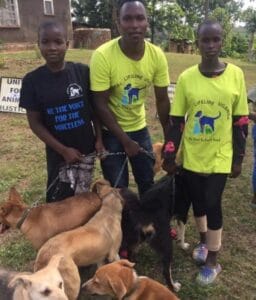
Animal Lifeline Uganda (ALU) is a nonprofit organization dedicated to the welfare of companion animals in Uganda. The organization was founded in 2015 by Edwin Elvis Ssemyalo after he saw how many dogs and cats were living on the streets without care, medical attention, or protection.
The shelter is located in Mityana, a city west of Kampala, and provides a home for more than 100 dogs and cats. Many of these animals have been abandoned, abused, injured, or sick when they are taken in.
Their mission
ALU aims not only to rescue individual animals but also to raise awareness about animal welfare in Uganda. In many parts of the country, spaying and neutering and veterinary care are limited, and knowledge about responsible pet ownership is still limited.
Sterilization and Prevention
An important part of their work involves spay and neuter campaigns. By having dogs and cats spayed or neutered, they aim to reduce the stray population in an animal-friendly way and prevent future animal suffering.
Childcare
Step by step, the organization is building safe, wooden kennels where the animals can recover. Because financial resources are limited, expansions are often made possible by international donors and fundraising campaigns.
Funding
Animal Lifeline Uganda does not receive any regular government funding and relies largely on:
• international donations;
• private sponsors;
• fundraising;
• volunteers;
• campaigns to build new kennels and purchase food and medicine.
Challenges
Like many animal welfare organizations in East Africa, ALU faces:
• limited access to veterinarians;
• high costs for food and medication;
• a growing number of stray animals;
• limited financial resources;
• the need to continually create new shelter capacity.
Why is this a good fit for Wings for Animals?
Animal Lifeline Uganda aligns well with the vision of Wings for Animals. The organization combines shelter services, medical care, spaying and neutering, education, and prevention . In doing so, they not only save animals that nú need help, but they are also working on a structural solution to the stray animal problem in their region.
